
Why Blasting Your Defroster on a Frigid Flagstaff Morning Can Shatter a Chipped Windshield

The Hidden Danger in Your Crisp Autumn Commute
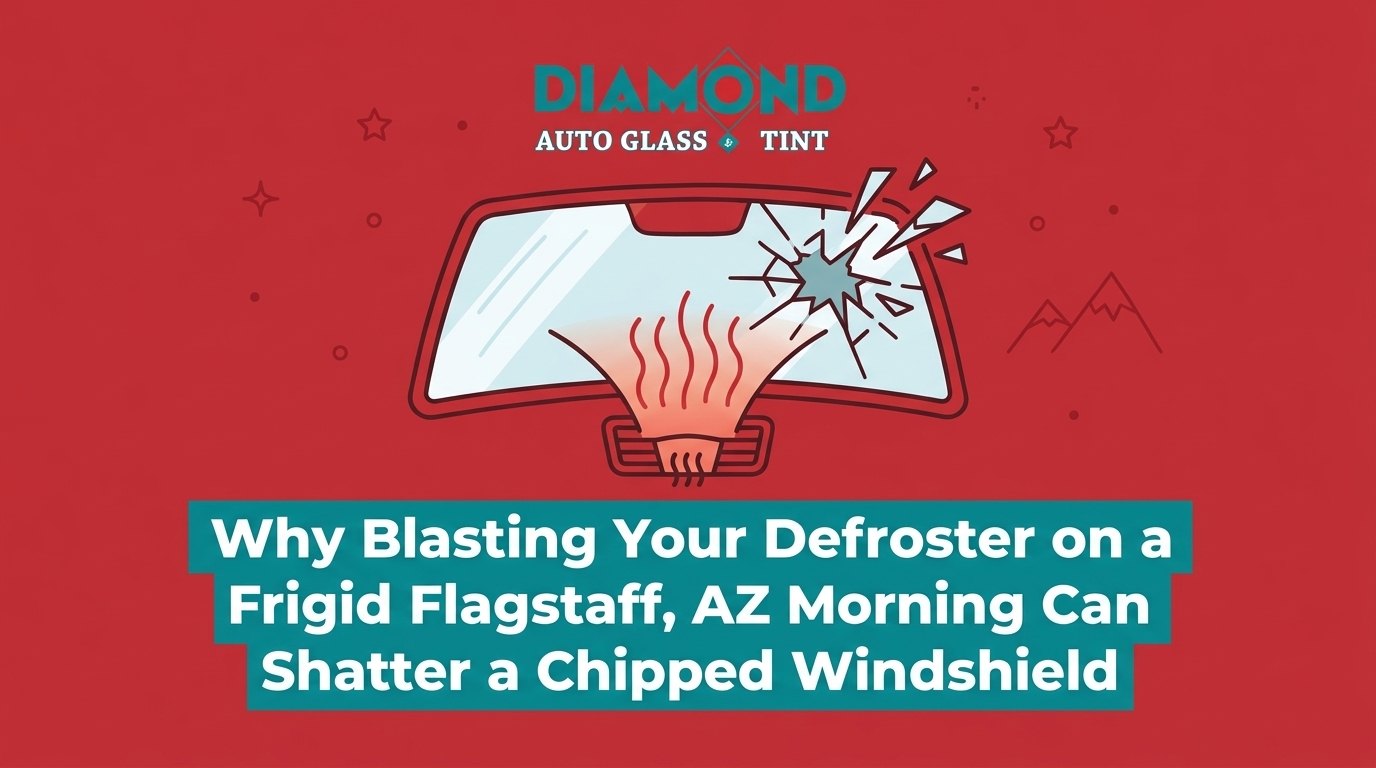
The October first freezes are creeping into the high country, which is exactly why blasting your defroster on a frigid Flagstaff, AZ morning can shatter a chipped windshield before you even pull out of the driveway. You step out of your front door, see the heavy layer of frost coating your vehicle, and do what almost every driver does: you start the engine, crank the heat to the highest setting, and redirect all that hot air straight onto the frozen glass. It seems like the fastest way to get on the road, but this common morning routine hides a massive risk if your glass is already compromised.
That small, seemingly harmless rock chip you picked up during a summer road trip is no longer just a cosmetic annoyance. In freezing temperatures, it becomes a severe structural vulnerability. The sudden blast of intense heat against freezing glass creates a violent physical reaction. Within seconds, you might hear a sharp pop, followed by the sight of a tiny bullseye chip instantly expanding into a massive crack across your line of sight. Now, you are faced with a critical decision point: you can either address minor damage right now with a simple repair, or you can wait until the morning defroster shatters the compromised glass, forcing a complete replacement.
Before the deep winter sets in, it is essential to explore your auto glass repair options. Understanding the hidden mechanics of thermal shock will help you protect your vehicle and keep your morning commute safe.
Understanding the Physics of Thermal Shock on Auto Glass
To understand why your glass cracks so violently, you have to look at how modern vehicle windows are manufactured. Your windshield is not a single piece of glass. It is actually a highly engineered sandwich made of three distinct layers: an outer layer of glass, an inner layer of glass, and a flexible, transparent plastic interlayer sandwiched between them.
This middle layer is made of polyvinyl butyral (PVB). Its primary job is safety. If an object strikes the window, the PVB layer holds the shattered glass pieces together, preventing them from flying into the cabin. However, this multi-layered construction also means the glass reacts uniquely to temperature changes. Like most materials, glass naturally expands when it gets warm and contracts when it gets cold. When these temperature changes happen slowly and evenly, the glass handles the shifting dimensions without any issue.
Thermal shock occurs when temperature differentials happen too rapidly for the glass to expand or contract evenly. If one section of the glass is expanding rapidly while the adjacent section remains contracted and rigid, the opposing forces create immense localized stress. Because glass is a rigid material, it cannot bend to accommodate this stress. Instead, it fractures. When you need prompt auto glass replacement, it is often because thermal shock has pushed the outer layer of glass past its breaking point.
How the PVB Interlayer Reacts to Extreme Cold
The PVB interlayer is highly sensitive to temperature fluctuations. During the warm summer months, this plastic layer is pliable and flexible, allowing it to absorb mild impacts and structural shifts easily. But when the temperature plummets, the physics change dramatically.
- Loss of flexibility: The PVB interlayer stiffens significantly in freezing temperatures, becoming far more rigid than it is during the summer.
- Reduced shock absorption: Because it loses its flexibility, the stiffened interlayer has far less ability to absorb sudden thermal stress or physical impacts.
- Amplified stress transfer: When the inner glass layer expands from the heater, the rigid, frozen PVB layer transfers that stress directly to the contracted outer layer, creating the perfect storm for a fracture.
The Defroster Effect: When Hot Air Meets Freezing Glass
The exact mechanism that triggers a cracked windshield is a battle of extreme temperature extremes. On a cold autumn morning, the exterior of your vehicle might be sitting at 32 degrees Fahrenheit or even lower. The outer layer of your windshield is fully contracted, rigid, and chilled to the core.
When you start your car and turn the defroster to its maximum setting, the vehicle’s HVAC blower pushes air over the heater core and forces it up through the dashboard vents. Within minutes, that defroster can blow air exceeding 120 degrees Fahrenheit directly against the interior glass. You now have a nearly 90-degree temperature difference separated by just a few millimeters of glass and plastic.
The localized stress: The inside layer of the glass absorbs that 120-degree heat and begins to expand rapidly. Meanwhile, the outside layer is still exposed to the freezing air and remains tightly contracted. The glass is literally pulling itself apart. This massive localized stress travels through the rigid PVB layer, seeking the path of least resistance to release the built-up energy. Understanding how cold weather impacts windshield cracks is crucial because this energy will always seek out the weakest point in the structure.

Why That Summer Rock Chip is a Ticking Time Bomb
If your windshield is perfectly flawless, it can usually withstand the stress of a morning defroster. The energy distributes evenly across the smooth, uncompromised surface. However, if you have a rock chip, the structural integrity of the outer glass layer is already broken.
A chip is not just a missing flake of glass. It is surrounded by microscopic fissures—tiny cracks that dig into the outer layer. When the defroster creates thermal shock, the expanding inner glass pushes against the contracted outer glass, and all of that stress funnels directly into those micro-fissures. The chip acts as the exact weak point where the thermal stress will violently release its energy.
This is exactly why fixing your auto glass cannot wait. The visual result is immediate and irreversible. A small bullseye chip will instantly spiderweb, or a tiny star break will run horizontally across the driver’s line of sight in the blink of an eye. Once a chip runs into a long crack, it transitions from a simple, quick resin fill repair to requiring a completely new, factory-standard windshield installation.
How Different Chips React to Thermal Shock
| Type of Damage | Characteristics | Thermal Shock Vulnerability |
|---|---|---|
| Bullseye Chip | Circular impact with a separated cone in the outer glass. | High risk of the outer ring expanding into a long horizontal crack. |
| Star Break | Small impact point with multiple tiny cracks radiating outward. | Extreme risk. The existing micro-cracks act as perfect channels for stress release. |
| Half-Moon | A partial bullseye, often with a flattened side. | Moderate to high risk of spiderwebbing under sudden heat. |
| Combination | Multiple types of damage (e.g., bullseye with star legs). | Guaranteed failure point under sudden temperature differentials. |
How High-Altitude Climates Accelerate Glass Damage
The geography of your daily commute plays a massive role in how vulnerable your vehicle is to glass damage. Flagstaff high-altitude mornings present a unique set of challenges that drivers at sea level rarely have to consider. Sitting at approximately 7,000 feet in elevation, the region experiences rapid diurnal temperature shifts—meaning the temperature swing from the daytime high to the nighttime low is drastic and sudden.
Even if daytime temperatures in early October feel perfectly mild and comfortable, the extreme high-altitude overnight cooling strips the heat out of the environment rapidly. The thin mountain air does not hold radiant heat, causing overnight temperatures to plummet to freezing or below. This creates a severe temperature differential on the glass before the sun even comes up.
Furthermore, frost accumulation adds another layer of thermal complexity to the morning routine. Frost acts as an insulating layer of ice directly bonded to the outer glass. When you blast the interior heater, the glass is trapped between a layer of freezing ice on the outside and 120-degree air on the inside. These specific regional factors make high-altitude windshields exceptionally vulnerable during the fall transition, turning a small chip into a major liability overnight.
Safe Ways to Defrost Your Windshield Without Causing Damage
Managing frosty mornings requires a bit of patience and the right technique. If you have a chip that you haven’t been able to repair yet, or if you simply want to protect your intact glass from unnecessary thermal stress, you need to change how you warm up your vehicle.
Here are the safest, most effective ways to clear your glass without triggering a thermal shock event:
- The gradual warm-up method: Start the vehicle and turn the heater on to a low setting. Do not immediately crank the dial to maximum heat. Letting the interior warm up gradually allows the glass to expand slowly and evenly, preventing localized stress fractures.
- Use the floor vents first: Instead of directing air straight at the windshield, set your HVAC system to blow air through the floor vents. Heat naturally rises. By filling the cabin with ambient warmth from the bottom up, the glass warms gently without taking a direct blast of hot air.
- Avoid the hot water trap: Never, under any circumstances, pour warm or hot water over a frozen windshield to melt the ice. This is the fastest way to cause instant, catastrophic thermal shock. The glass will almost certainly shatter or crack beyond repair.
- Scrape smartly: Use a proper plastic ice scraper gently. Avoid putting direct, heavy pressure on areas where you know there are existing chips or cracks. Never tap or bang the scraper against the glass to break up thick ice.
Intercepting the Damage: Repair Before Replacement
The most effective way to handle thermal shock is to remove the weak point entirely before the freezing temperatures arrive. Professional chip repair is an interceptive measure that restores the structural integrity of your glass, saving you from a much larger headache down the road.
During a professional repair, a technician injects a specialized, optically clear resin directly into the chip and its surrounding micro-fissures. Once the resin is cured under ultraviolet light, it bonds the broken glass back together. This eliminates the weak point. A properly repaired chip is structurally sound and can easily withstand the thermal stress of a winter defroster, expanding and contracting uniformly with the rest of the windshield.
Prompt, professional windshield replacement and repair saves drivers from unsafe visibility issues caused by sudden winter crack-outs. The window of opportunity to fix a chip closes fast once the October freezes begin. A chip repair takes only a fraction of the time and resources compared to a full replacement, but it must be done before the damage spreads. If you wait too long, you will find yourself looking into replacing windshields damaged in the Arizona winter instead of enjoying a quick, simple fix.
Frequently Asked Questions
Can a car heater crack a cold windshield?
Yes, a car heater can absolutely crack a cold windshield through a process called thermal shock. When a defroster blows hot air onto freezing glass, the inside layer expands rapidly while the outside layer remains contracted. This extreme stress will exploit any existing chips or micro-cracks, causing them to spread instantly.
Why do windshield chips spread in the winter?
Windshield chips spread in the winter because the extreme cold makes the plastic interlayer of the glass rigid, reducing its ability to absorb stress. When the glass experiences temperature shifts from sunlight or a vehicle’s heater, the resulting thermal stress focuses entirely on the weak point created by the chip, forcing it to crack outward.
How to safely defrost a chipped windshield?
To safely defrost a chipped windshield, start your vehicle and turn the heater on a low setting, directing the air to the floor vents rather than the dashboard defroster. Let the cabin warm up gradually so the glass can expand slowly. Never pour hot water on the glass or blast high heat directly onto the frozen surface.
At what temperature does thermal shock occur in auto glass?
Thermal shock in auto glass isn’t triggered by one specific temperature, but rather by the rapid difference between two temperatures. Typically, if the outside glass is near freezing (32°F or below) and the inside is suddenly hit with defroster air exceeding 100°F, the extreme temperature differential is more than enough to cause a fracture.
Does high altitude make windshield chips more likely to spread?
Yes, high altitude makes windshield chips more likely to spread due to rapid diurnal temperature shifts. Areas at high elevation experience warm daytime temperatures followed by sudden, freezing overnight drops. These drastic and rapid temperature swings put immense, repetitive expansion and contraction stress on the auto glass.
Protect Your Commute Before the Freeze
A small rock chip might seem easy to ignore during the summer, but the incoming autumn freezes will quickly turn it into a major safety hazard. Don’t let a sudden blast from your morning defroster force you into a full windshield replacement. Schedule your chip repair today to ensure you have a clear, structurally sound windshield that can handle whatever the high-altitude weather throws your way.
Free Online Quote
Cracked Windshield?
Diamond Auto Glass in Flagstaff is Northern Arizona's #1 windshield and auto glass repair and replacement company. We'll fix you up in hours when you're in a pinch.

Rock hit windshield just outside of town. Called closest place with highest rating and am happy I did. Got us right in, fixed the two runs that were created, cleaned up the work area for a very reasonable price. Great job, thank you Diamond Auto!
MARLETTA TUCKER
Google Review